
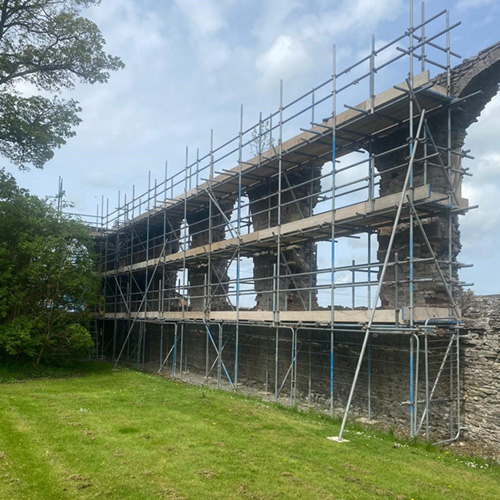
Specialist scaffolding is essential for historic buildings because these structures often have unique architectural features, fragile materials, and specific conservation requirements that standard scaffolding cannot adequately address. Here are the key reasons why specialist scaffolding is needed:
1. Preserving Fragile Structures
- Historic buildings are often made of delicate materials like lime mortar, sandstone, or timber, which can be easily damaged by traditional scaffolding.
- Specialist scaffolding minimises direct pressure on the building by distributing weight carefully.
2. Custom Design for Irregular Structures
- Unlike modern buildings with uniform surfaces, historic structures often have uneven walls, intricate facades, or spires that require bespoke scaffolding solutions.
- Traditional scaffolding may not fit properly, risking instability or damage.
3. Non-Intrusive Fixings
- Many historic buildings have listed status, meaning no drilling or permanent fixings are allowed.
- Specialist scaffolding uses non-invasive techniques such as counterweights, adjustable props, and tie-free systems to protect the structure.
4. Access to Hard-to-Reach Areas
- Ornate features, chimneys, towers, and domes require tailored scaffolding that provides safe access for conservation work.
- Suspended or cantilevered scaffolding may be necessary in situations where ground access is limited.
5. Compliance with Heritage Regulations
- Working on historic buildings requires adherence to conservation laws and regulations set by organisations like Historic England or CADW in Wales.
- Specialist scaffolding companies ensure all work meets heritage guidelines.
6. Safety for Workers and the Public
- Old buildings can have unstable sections, making it essential to have scaffolding that provides secure working platforms without putting workers or passersby at risk.
- Protective coverings and netting may also be required to prevent debris from falling.
7. Weather Protection
- Many historic restoration projects require long-term work, meaning scaffolding must withstand varying weather conditions.
- Temporary roofing and encapsulation systems help protect both the building and workers from environmental damage.
8. Minimising Visual Impact
- In high-profile historic sites, scaffolding must be designed to blend in as much as possible to maintain the building’s aesthetic appeal.
- Printed sheeting, colour-matched designs, or discreet support structures can help reduce visual disruption.
Using specialist scaffolding ensures that restoration or maintenance work is carried out safely, effectively, and in line with conservation principles, helping to protect historic buildings for future generations.